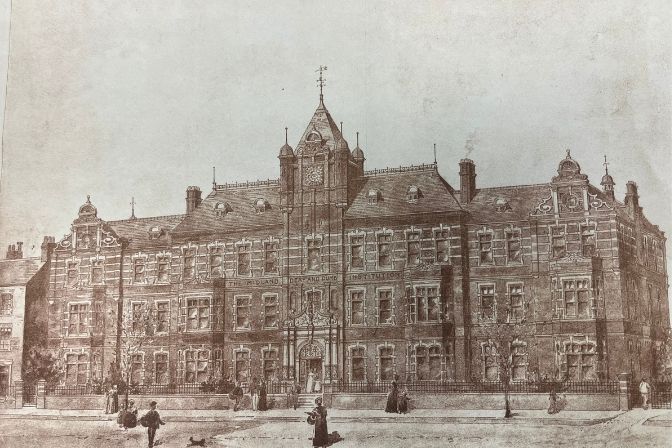
This Remembrance Day, students from Royal School for the Deaf Derby (RSDD) will sign the words "we remember them" in British Sign Language as part of the city’s commemorations. Deaf people have been historically barred from the front line, but archived newspaper reports show that Derby's school for the deaf was closely tied to Britain's First World War effort.
An early glimpse comes from the school's founder, Dr William Roe. In August 1914 he was on holiday in Switzerland with his family when war broke out, and gave the Derby Daily Telegraph a fascinating firsthand account about the long journey home through France; past trains of guns, ambulances and wounded prisoners. In Paris, a hotel manageress told him the war would "almost certainly bring bereavement to nearly every family". Her words were about France, but they describe a cost felt far beyond it, including here in Derby.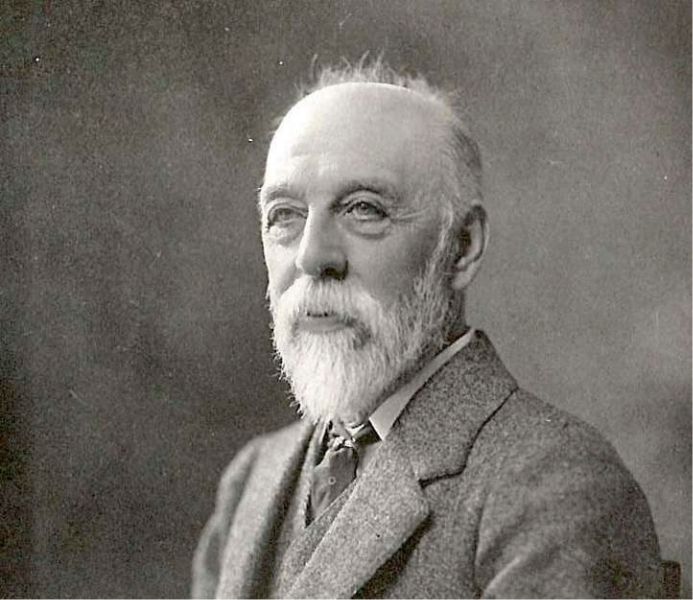
(Dr William Roe, founder of the school now known as the Royal School for the Deaf Derby)
The school was then the Royal Institution for the Deaf and Dumb, and the war soon reached its staff. Six men from the institution were serving in the Army as of 1917, a large number for a deaf school that relied on specialist staff.
Not all returned. Corporal A. Holman of the 71st Field Company, Royal Engineers, taught woodwork at the institution and was a well-known Derby athlete. He enlisted as soon as war broke out and died in hospital after being sent to the Dardanelles. Signaller Charles Beecher joined the staff in 1913 and qualified as a teacher of the deaf. He became the institution's first scoutmaster and taught the boys to swim, before he was killed in action in France on 11 April 1918.
The war also left its mark on those who came home. On 31 August 1917, reports show that the institution had been asked to help soldiers who had lost their hearing in the war to learn lip-reading. With so many masters enlisted, lessons could not run in school hours, so the remaining teachers volunteered to help in the evenings. The Board of Management at the school agreed to help the men free of charge.
Throughout the battle though, there remained a message of hope. The children were told at a New Year gathering in 1917 that these were "strenuous and difficult times", but there was faith "in spite of all that was depressing" that they would surmount their troubles and "before very long live in a more peaceful atmosphere".
More than a century on, that hope still resonates. When the students sign this Remembrance Day, they will remember those who served, those who did not come home, and those who used their skills to help the war's casualties.
Paul Burrows, Headteacher of the Royal School for the Deaf Derby, said:
In that moment, hundreds of people will remember together in a language that is so important to our Deaf community.
Remembrance belongs to everyone, and by inviting the audience to learn and sign the words together, we hope to create a powerful act of collective remembrance and inclusion.
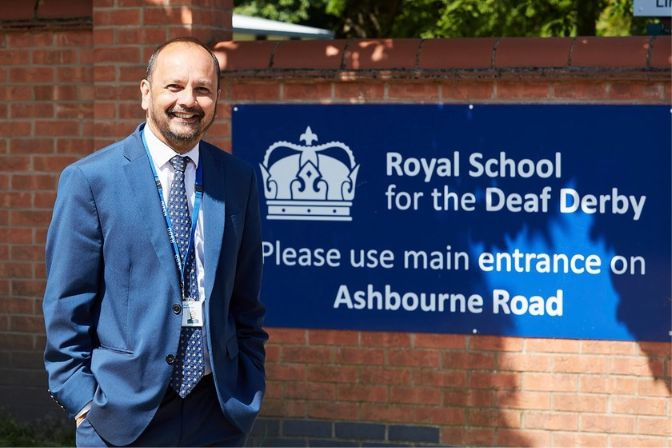
(Paul Burrows, the current Headteacher of the RSDD)
Derby’s Remembrance Day service and parade will take place on Sunday 8 November. Local veteran and youth organisations will parade through the city centre to the Market Place, where a short service, a two-minute silence and the laying of wreaths at the War Memorial will follow.
On Armistice Day, Wednesday 11 November, a short ceremony at the War Memorial at 11am will include the two-minute silence and laying of wreaths. Those unable to attend can watch live on the Council’s YouTube channel.