Green container: food waste - coming soon
New weekly food waste collection service
This new scheme is being introduced across the country, in line with the Environment Act 2021 and the Government's Simpler Recycling reforms, with a weekly household food waste recycling collection service due to start from 31 March 2026.
This is a brand new household-only service that will not replace any existing bins or collections. Blue, brown and black bin services will continue as usual.
Caddy and container
From 5 January 2026 onwards, we will provide all Derby city households with:
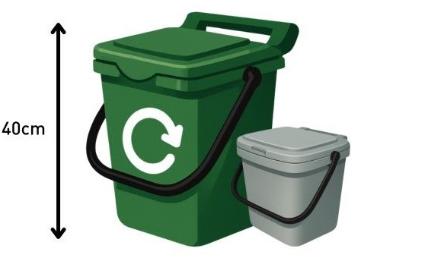
- an outdoor, dark green, 23 litre lockable food waste container, which we will empty weekly
- an indoor, light grey, 5 litre kitchen caddy
- a printed guide with more information about this new collection.
The 5 litre kitchen caddy is a helpful item to be used in the kitchen to collect food waste, it is only 20cm tall and has a lockable lid. A lot of people find it helpful to keep it under the sink, next to the kitchen bin or on the worktop.
The green 23 litre food waste outdoor container is smaller than our wheelie bins - only 40cm tall, with enough space to accommodate your weekly food waste. It has a lockable lid that closes securely, stopping pests getting in.
If you find that once collections have started you regularly fill your bin before collection day, you will be able to request an additional outdoor container.
Costs and delivery
The new bins and the collection service are have no extra costs for residents.
Containers are being delivered early and in stages, as more than 100,000 are distributed across the city. This phased approach ensures every household receives what they need in time for the service. If you haven't received yours yet, don't worry - you'll receive it before the service starts for you.
When you receive your container:
- check inside: the grey caddy and the guide will be in there
- keep them safe
- put your house number on the green one
- do not use it until the service starts on 31 March 2026
- keep the printed guide handy, as it has important information about the service in it.
If containers have been delivered to the rest of your street and you believe you were missed, please wait one working day and complete our bin requests form to register this. Our team will make sure you receive yours before the service starts.
Brown bins and food waste
If you currently use your brown bin to recycle food waste with your garden waste, you can keep doing that until 30 March 2026.
However, from 31 March 2026, your brown bin will be for garden waste only and your new green container will be for food waste only. Brown bins will not be collected with food waste in them from April.
The food waste which can currently be recycled in the brown bin (until end of March), is the same as can go in the new food waste caddy. The difference is the treatment method: food collected by the new service will be treated by Anaerobic Digestion and garden waste will start to be treated in a traditional outdoor compost method – cheaper and cleaner for everyone.
Watch our video for help with your lid
If your container lid does not lie flat, don’t worry. This is because the containers have been stacked for a while. Over time, the lid will return to normal. This video has more information about what to do when you receive your containers.
Food waste collections start from 31 March 2026.
City-wide delivery of containers began in January 2026.
We aim to complete deliveries before the end of March 2026.
Inside the green container you will find the kitchen caddy and a printed guide.
Please read the guide and keep it handy.
Put your house number on the green container!
If the lid becomes detached, you can carefully reattach it yourself.
To do this, make sure the handle is in the open position.
If the lid does not lie flat, don’t worry.
This is because the containers have been stacked for a while.
Over time, the lid will return to normal.
The lid can be locked in two positions: with handle on the front or upright - ready for collection.
To lift the lid, the handle must be in the unlocked position, either to the back, or straight out at the front.
The kitchen caddy is a helpful tool to be used in the kitchen to collect food waste.
All bags and liners such plastic or compostable are removed before the food waste is recycled.
Plastic bags are preferred because they are much easier to remove.
Line your caddy, put food waste in it.
Tie the bag and put it in the outdoor container.
Keep the container locked.
Present it for collection every week on your regular collection day with handle upright to help our team.
The guide contains a lot of information about recycling and waste in Derby, including Christmas dates!
Flats and shared bin properties
Our waste outreach officers will visit and evaluate all properties that have shared bins (flats, large HMOs and others), so we can provide a system that suits your building and resident's needs. This may include shared outdoor food waste bins.
Once we’ve confirmed the most suitable service for the property you live in, we’ll be in touch again to arrange delivery of your personal kitchen caddy, deliver and confirm the location of outdoor containers or bins, and provide guidance on when and how to use the service.
With over a thousand flats and shared accommodation throughout the city, it will take us a while to assess them all, so don’t worry if you haven’t heard from us when the service starts.
This page will be updated as more details become available.
How to use your containers
All you need to do is swap the bin you put your food waste in. Using your caddy instead of your waste bin doesn't need to take any extra time. Simply follow these steps:
1. Line your kitchen caddy before you put your food waste in it. Any plastic liner or bag will do.
2. When full, remove the liner, tie the top and put it in your outdoor green food waste recycling container. Remember to lock the container by closing the lid and leaving the handle in the upright or forward position to avoid spills or unwanted animals.
3. Put your food recycling container out, at the kerbside, by 6:30am every week on the same day as your usual waste collections. Ensure the lid is locked and the handle in the upright position to help with collection. If you use assisted bin collections, it will work in the same way.
4. If you forget to put your green food waste bin out, present it again the following week. This is a weekly service.
The outdoor food container is easy to carry using the handle. Even when it is full, it is much lighter than your usual household wheelie bins and should not be difficult to move.
In windy days, we recommend keeping the green container near your larger bins and keeping it locked to avoid a mess in case it gets blown over.
Top tip: If you don’t want to use a kitchen caddy and prefer to dispose of food directly into your outdoor bin – that’s ok, it’s your choice. However, we recommend that you use bags to contain the food waste or at least line your green container instead, and make sure you tie the top before collection to help keep it clean. Remember to keep the lid locked!
Watch this video and find out more about the importance of recycling food waste:
What goes in your container
Your green container is for food waste only and helps you recycle everyday food that can’t go in other bins.
Most households produce some kind of food waste, and no amount is too small. While the best thing we can do with food is enjoy it, some waste is unavoidable and can be recycled by this service.
Your green container accepts:
- All uneaten food and plate scrapings.
- Raw meat, cooked meat and bones.
- Raw fish, cooked fish and bones.
- Dairy products, cheese and egg.
- Teabags and coffee grounds.
- Rice, pasta and beans.
- Bread, cakes and pastries.
- Raw vegetables, cooked vegetables, whole fruit and peelings.
- Mouldy and out of date food, including ready meals.
Your green container will accept any type of bags and liners you want to use to keep your caddy clean and hygienic.
If you're unsure where something should go, try our online Recycling Helper - it gives instant answers for hundreds of everyday items.
What not to put in your container
- Items which are not food, this includes any type of food packaging such as plastic (other than liners), glass, metal or cardboard.
- Liquids like soup, milk or cooking oil. We are unable to collect liquids in our food waste bins as they are not sealed and this would create spills and mess.
Top tip: take care to only include your food waste, as we will be unable to collect containers which are contaminated with the wrong materials.
Bags and liners
Any type of bag or liner can be used in your caddy including:
- reused household bags
- bread bags
- potato bags
- frozen food bags
- carrier bags
- plastic liners
- compostable liners.
All bags, whether plastic or compostable, will be removed before recycling begins. They will then be processed through Energy from Waste (EfW).
We’re encouraging residents to use any old bag that would otherwise be disposed of in the general waste, giving it a second life. This avoids the environmental impact of producing and the costs of buying special bags to line your food caddy. If you’d prefer to not use a bag, newspaper can be used instead.
How to keep your containers clean
Nothing will smell if you empty your kitchen caddy regularly into the outside food waste container, tie up the liners and keep the lid closed. Your outdoor green container will be emptied weekly, so your food waste will actually be collected more frequently than if put in your black bin.
Follow these simple tips:
Line your kitchen caddy
Use any liner or bag you prefer to line your kitchen caddy. This is the first step to keeping food waste contained.
Tie bags securely
Make sure bags are firmly tied and not torn. When bags are secure, leaks are unlikely, helping to keep both your kitchen caddy and outdoor green container clean.
Clean your kitchen caddy regularly
Wash your kitchen caddy inside and out on a regular basis to remove any residue and keep it hygienic.
Check and rinse your green container after collection
After your food waste has been collected, check your green container. If needed, give it a wash, allow it to dry, and it’s ready to use again.
Please ensure that your outdoor container is always locked to prevent spillages and wildlife accessing it.
Why you should recycle your food waste
Residents are encouraged to take part, as this new service brings clear benefits for Derby. With most households lacking the space or ability to compost at home, it ensures food waste is managed in the best possible way and accepts items that home composting cannot.
Here are five great facts that will inspire you:
1. Food waste that is recycled will be converted into natural forms of energy and fertilisers.
A single caddy of household food waste can:
- power an LED light bulb for over 24 hours
- boil a kettle three times
- fully charge a smartphone twice.
The fertiliser produced is nutrient rich and natural avoiding the need for chemical alternatives. This can be used in agriculture and land regeneration.
2. Recycling food waste is significantly cheaper. Disposing of food waste in your black bin costs almost 6 times more than recycling it in your new green container.
3. Around one third of the average black bin (by weight) is food waste. Your black bin will be less full, and you will benefit from a more regular collection of your food waste.
4. Food waste that is disposed with the black bin doesn’t harmlessly breakdown. It has a big carbon footprint. Recycling food waste with the new service is the best option to reduce this impact.
5. The caddies and containers are made from recycled plastic and designed for long-term reuse.
If you do not wish to take part in food recycling
If you do not wish to take part, you can keep having your food waste collected in your black bins. However, you would miss out on having the waste collected every week.
We are unable to collect the containers back as the Council is legally required to provide the containers and weekly food waste collections to all residents. The containers are made of hard plastic and cannot be recycled in your blue bin. If you dispose of them in your blue bin, it may be classed as contaminated and the rest of your recycling not being collected.
Any containers taken to Raynesway HWRC, will be returned to the Council’s stock and will be used for replacements.
The investment has already been made. The more households that use the service, the greater the environmental and financial benefits for the city.
How food waste recycling works
This system is different from home composting, which demands space and ability that most households lack. It is simpler for residents to manage and can accept all types of food waste, including bones and carcasses, raw meat and dairy products, as well as the bags and liners used to keep containers clean.
All food waste collected in Derby will be sent to a local facility, Severn Trent Green Power, where it is recycled into renewable energy and fertiliser.
What is anaerobic digestion (AD)?
Food waste from Derby will be recycled through a process called anaerobic digestion (AD). This process uses microorganisms to break down food waste in the absence of oxygen, inside a sealed system.
As the waste breaks down, it produces biogas, which is upgraded to biomethane and injected into the national gas network to power homes and businesses. Over the first two years of the service, enough energy will be generated to power more than 2,000 homes.
The process also produces a nutrient-rich material called digestate, which is used as a fertiliser in agriculture and for land regeneration.
The process automatically removes all bags and liners (plastic or compostable) before the food waste recycling process starts. Plastic bags are preferred as they are easier to remove, and will keep your caddy clean, while giving single use plastic bags a second use before they are disposed of with Energy from Waste (EfW).
The video shows exactly how the AD process works: